Over the years, we learned in the asbestos industry that details matter. They matter when an asbestos inspector conducts a survey. For consultants, the same applies when they prepare a report. They matter when a contractor is bidding a project. They matter when the New York State Department of Labor (NYSDOL) Asbestos Control Bureau (ACB) reviews a project. And, most importantly, they matter when workers are standing in a building, getting ready to disturb material that may contain asbestos.
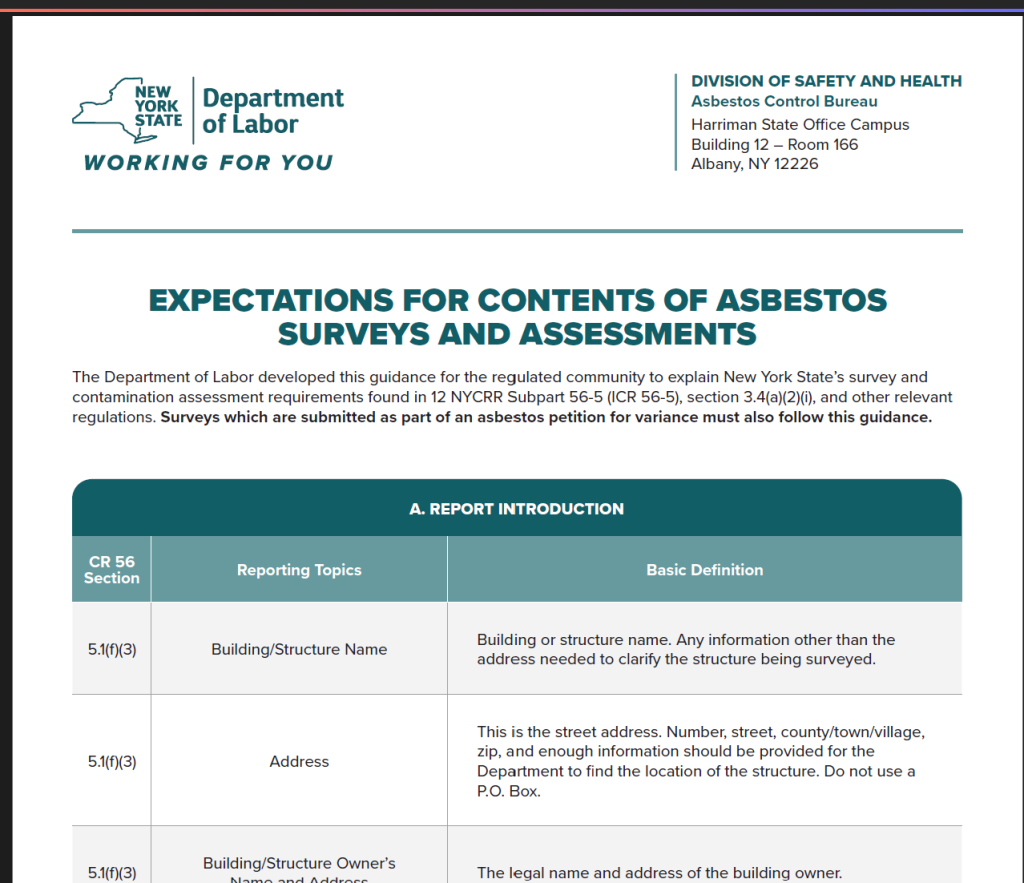
NYSDOL Fact Sheet on Asbestos Surveys
This prompted us to review the NYSDOL ACB fact sheet. It is titled “Expectations for Contents of Asbestos Surveys and Assessments.” We introduced this fact sheet in our blog. The blog is titled “Regulatory Updates, Industry Concerns, and Straight Talk from OSHA and NYSDOL – Day 3.” The intent of the fact sheet appears straightforward: to provide asbestos inspectors and consultants with additional direction on what NYSDOL expects to see in an asbestos survey or assessment.
Unfortunately, when you start comparing the information in the fact sheet with the actual requirements of Industrial Code Rule 56 (ICR56), federal requirements, laboratory analytical methods, and the realities of performing asbestos inspections in the field, there are several areas that deserve closer examination.
Some of the information is useful. Some of it appears to go beyond what the regulation actually says. And some of it is internally inconsistent with other information NYSDOL has provided to the industry.
As someone who has been involved with asbestos inspections, abatement, consulting, training, and regulatory issues for decades, we believe these issues need to be discussed—not to criticize for the sake of criticizing, but because inspectors, consultants, contractors, building owners, and regulators all need to be working from the same set of rules.
The Importance of Getting the Survey Right
An asbestos survey is not simply a report that gets placed in a project file. The survey is the foundation upon which the project is built. The owner uses it to understand what asbestos-containing materials (ACM) may be present. The designer uses it to develop the project specifications. The contractor uses it to prepare a bid and develop an abatement plan. The workers rely on it to understand what they may encounter. If the survey is incomplete, everything downstream can be affected.
We have spent years as an asbestos abatement consultant and trainer. In class and when reviewing other consultants’ work, we know what happens when the survey doesn’t identify materials that should have been identified:
- Change orders,
- scope changes,
- delays,
- disputes,
- additional engineering controls,
- additional sampling, and
- additional abatement.
And sometimes, much worse, workers discover ACM after the project has already started. That is why we have always believed an asbestos survey should be conducted with the understanding that you are not just documenting a building—you are developing the information everyone else will depend on.
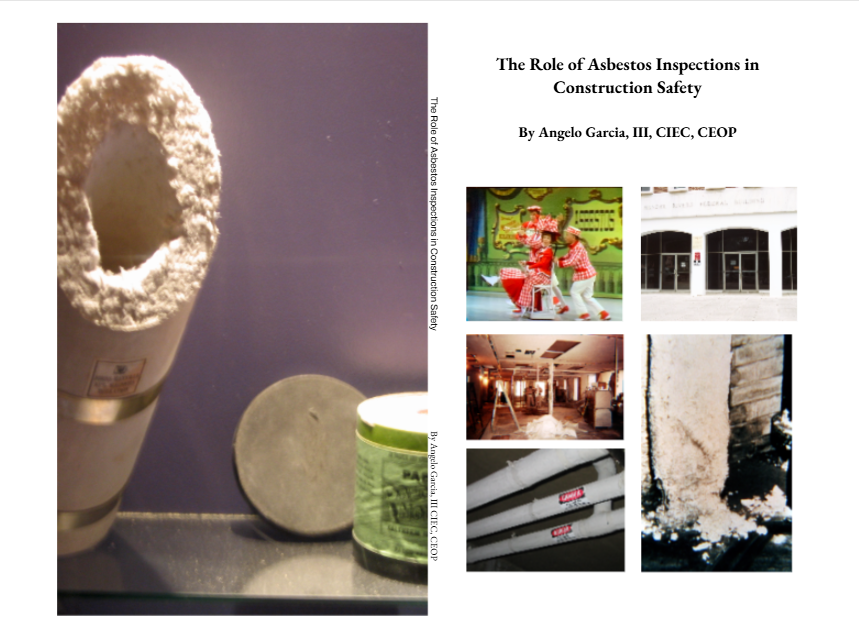
Our book “The Role of Asbestos Inspections in Construction Safety”
With that in mind, we developed a comprehensive “Asbestos Bulk Sampling Package” designed to provide practical, field-ready guidance. Click here to purchase the package. The package includes:
- An eLearning/On-Demand training course,
- A comprehensive reference book, and
- A durable laminated bulk sampling table designed for field use.
The goal is simple: provide asbestos inspectors with a clear understanding of sampling requirements, sampling strategies, homogeneous area determinations, suspect materials, and regulatory expectations. Too often, inspectors rely on incomplete information, outdated guidance, or interpretations that may not withstand regulatory scrutiny. We wanted to create a resource that inspectors can use both during training and while conducting actual field inspections.
Problem No. 1: “At Least Two Samples” Does Not Mean Two Samples Are Enough
One of the most concerning statements in the fact sheet is under “Minimum Samples Required.” The fact sheet states:
- “At least two samples of each homogeneous material must be taken to disprove the presence of asbestos.”
It then states that this is consistent with federal sampling requirements. This is an oversimplification. The number of samples required for an asbestos survey cannot simply be reduced to a blanket statement that “two samples are enough.” Sampling requirements depend upon the material, the homogeneous area, the size of the homogeneous area, and the purpose of the survey. See our blog post “The Role of Asbestos Inspections in Construction Safety: Don’t Miss the Asbestos Inspection Panel at PACNY’s Environmental Conference!” for the specifics of asbestos bulk sampling.
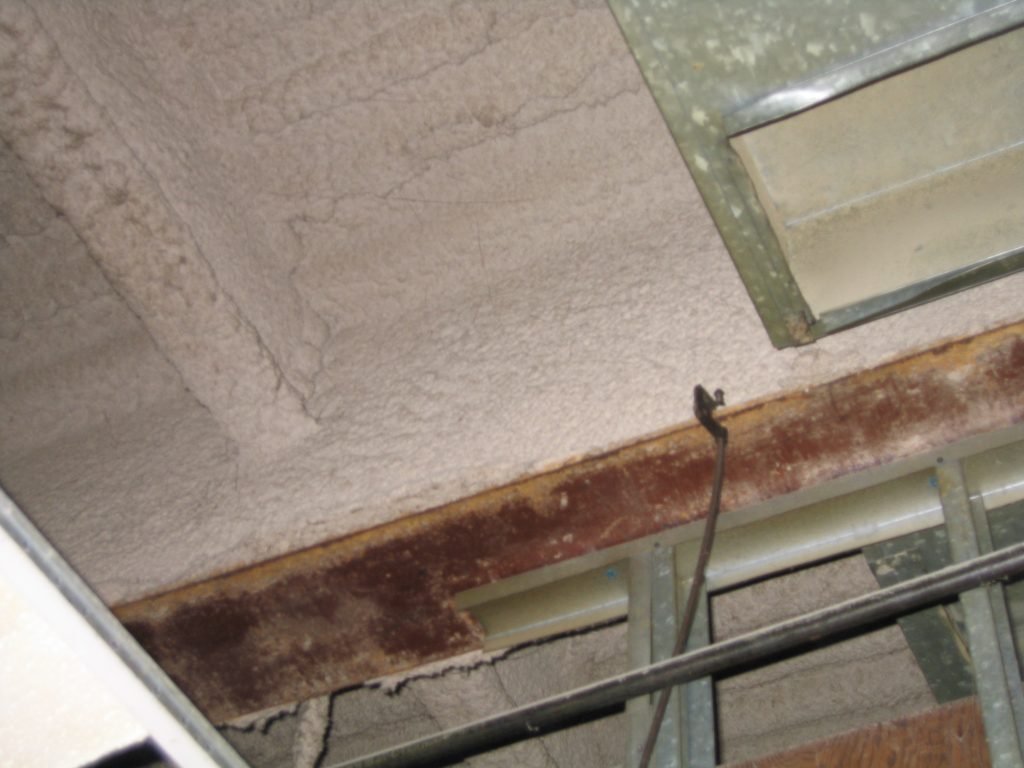
Sprayed-on fireproofing requires the 3-5-7 rule for samples, or 9 samples are recommended
AHERA sampling requirements, for example, have specific sampling protocols for surfacing materials, thermal system insulation, and miscellaneous materials. OSHA also has requirements that must be considered depending upon the project. The bigger problem is what happens when someone reads this fact sheet and interprets it as:
- “NYSDOL says I only need two samples.”
That is not how a competent asbestos inspection should be performed. Two samples may be appropriate in some circumstances. Two samples may be inadequate in others. The inspector needs to exercise professional judgment and conduct sufficient sampling to adequately characterize the material. The goal should not be to meet the minimum number of samples. The goal should be to adequately characterize the building materials that will be impacted by the project. There is a big difference.
Problem No. 2: Using Linear Feet for All Thermal System Insulation
Another issue we noticed in the NYSDOL fact sheet is the way asbestos quantities are identified. The fact sheet states:
- “Linear Feet (LF): Thermal system insulation (TSI). Square Feet (SF): All other ACM, debris and contaminated surfaces, if applicable.”
At first glance, this may seem like a simple way of identifying quantities. However, all thermal system insulation is not measured in linear feet.
Linear feet is appropriate for measuring pipe insulation because the pipe itself is generally identified by its length, as noted by the Environmental Protection Agency (EPA) in its letter to the City of Newport News in Virginia. But TSI is a much broader category.
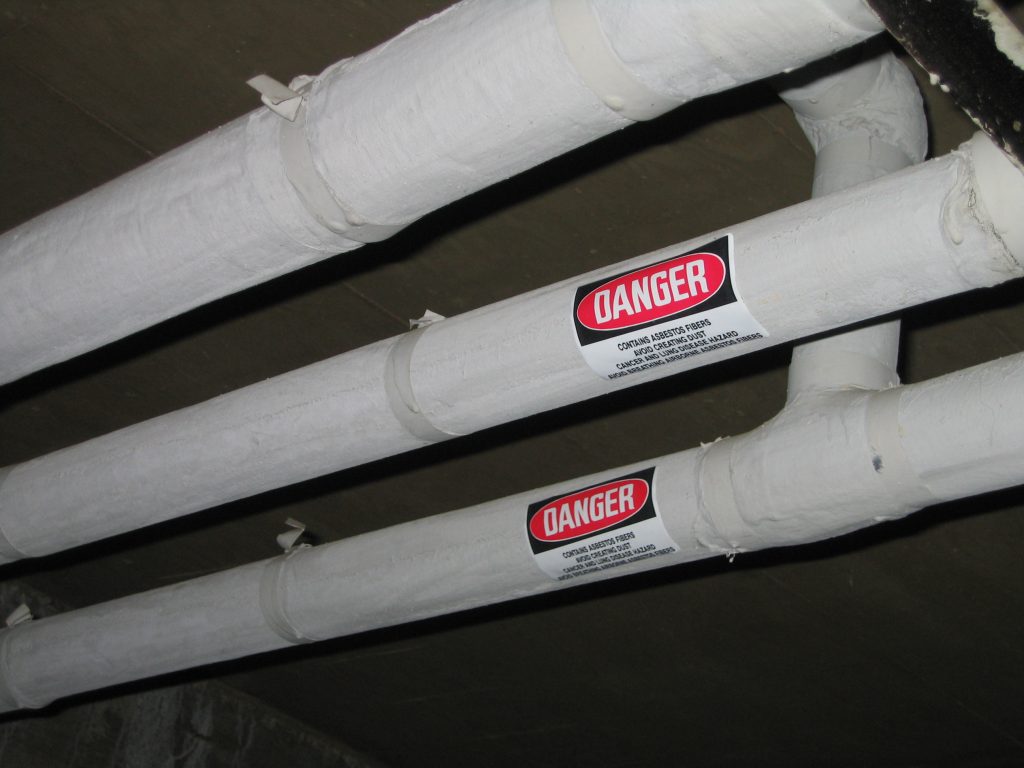
Linear feet (LF) is only for pipes
ICR 56 defines TSI as insulation applied to pipes, fittings, boilers, breeching, tanks, ducts, or other structural components to prevent heat gain or loss. So, how do you measure the asbestos-containing insulation on a boiler? What about a tank? A duct? Breeching? These materials must be quantified by using square feet.
For example, a project may contain 500 linear feet of asbestos-containing pipe insulation, but it may also contain asbestos-containing insulation on boilers, tanks, ducts, and fittings. Those materials are better quantified in square feet or by the individual component, depending upon the material and the purpose of the quantity measurement.
This distinction becomes important when developing an asbestos abatement design and determining the amount of material that needs to be removed. The fact sheet should not imply that all TSI is measured in linear feet. A more accurate approach would be to identify pipe insulation in linear feet, while other TSI components should be quantified using the measurement that accurately represents the material being addressed.
This may seem like a minor issue, but anyone who has prepared an asbestos abatement estimate knows that how you quantify the material directly affects the scope, bid, work plan, and ultimately the cost of the project.
Again, the goal should be accuracy—not simply putting everything into a convenient measurement category.
Problem No. 3: “Fair” and “Poor” Conditions Instead of the AHERA Damage Classifications
Another issue with the fact sheet involves the terminology used to describe the condition of asbestos-containing materials.
The fact sheet provides the following classifications:
- Intact: No visible damage.
- Good: No visible or very limited damage.
- Fair: Some visible, but not extensive, damage.
- Poor: Extensive damage and/or deterioration.
The problem is that “fair” and “poor” are not the terminology we would expect to see used when documenting asbestos material conditions based on the training requirements of the EPA Asbestos Hazard Emergency Response Act (AHERA) for asbestos inspectors.
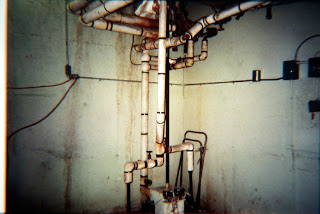
Damaged or Significantly Damaged?
“The pipe insulation is in fair condition”, and saying: “The pipe insulation is damaged.”
Problem No. 4: Another Missing Requirement: NVLAP in Addition to NYSDOH ELAP
NVLAP
Problem No. 5: The Statement Regarding Debris Is Particularly Concerning
- “There is no approved method for sampling debris.”
If dust and debris are suspect ACM, how are inspectors supposed to determine whether they contain asbestos?
For example, an inspector may encounter a pile of identifiable building material debris. It may be possible to collect representative portions of that material and submit them for bulk analysis. There are also established techniques for collecting settled dust from surfaces, including micro-vacuum and wipe sampling methods. For more discussion about this issue, see our blog post “Update of Dust and Debris Sampling in New York State: What Asbestos Inspectors Need to Know“. However—and this is where things get interesting—the analytical method and the regulatory purpose of the sampling have to be carefully considered.
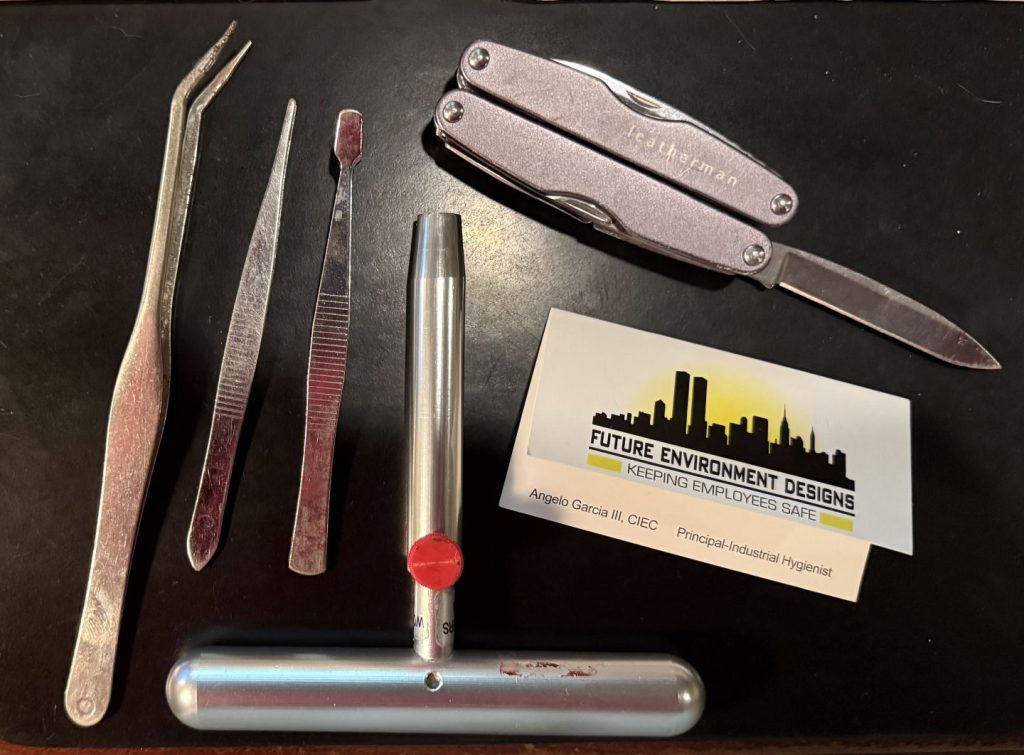
Sampling Tools
Problem No. 6: “If Asbestos Is Detected, It Must Be Addressed”
- What does “addressed” mean?
- Where the structure originated;
- How much asbestos is present;
- Whether the material from which it originated is ACM;
- Whether the material is friable;
- Whether the asbestos is currently capable of releasing fibers;
- Whether the contamination resulted from a previous abatement project;
- Whether the contamination is localized or widespread; or
- What level of response is appropriate.
Problem No. 7: The Fact Sheet’s Treatment of Layered Systems
“If one portion of the system is asbestos the entire system must be removed as asbestos containing”
- Roofing membrane;
- Built-up roofing;
- Asphalt;
- Insulation;
- Vapor barrier;
- Deck;
- Flashing;
- Adhesive; and
- Other components.
If one component contains asbestos, that does not necessarily mean every component in the entire roof assembly is an asbestos-containing material. The fact sheet does provide an exception where a portion of a layered system exists only in a specific area and can be reliably identified. But again, the language invites broad interpretations. The survey should identify “what material contains asbestos and where it exists”. That is much more useful than simply declaring an entire assembly ACM.
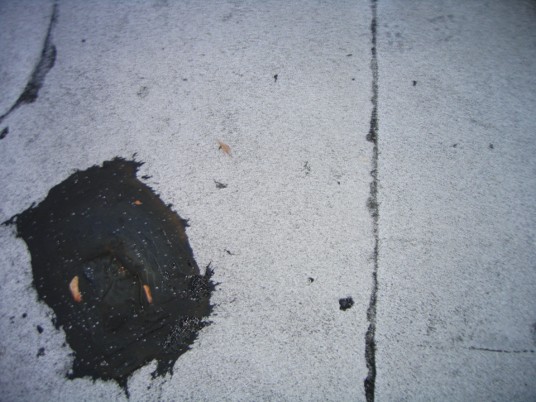
So if the patch is ACM and the rest of the roof is not, does it mean it all has to be treated as ACM?
Problem No. 8: Conflicting Laboratory Results
- But what happens when the laboratory results are genuinely inconsistent?
- Was the material actually homogeneous?
- Was there laboratory contamination?
- Was there cross-contamination?
- Was the sample representative?
- Was there a preparation problem?
- Was the material layered?
- Was there a different material embedded within the sample?
- Was the sample location properly documented?
These questions need to be answered before simply declaring that the entire homogeneous area is ACM. The fact sheet suggests that a contractor may attempt to address a questionable positive result through a site-specific variance. But a variance should not become the substitute for proper sampling and laboratory quality control.
Problem No. 9: Pre-Demolition Surveys and Destructive Sampling
Problem No. 10: The Definition of “Survey” Versus “Assessment”
- Sampling requirements;
- Analytical methods;
- Quantification;
- Delineation;
- Abatement requirements;
- Variances; and
- Final clearance.
The industry needs clear definitions and clear expectations.
The Biggest Problem: The Fact Sheet Should Not Replace the Regulation
Industrial Code Rule 56 is the regulation. The fact sheet should help inspectors understand the regulation—not create a parallel regulatory system. When consultants and contractors begin treating a fact sheet as though it is itself a regulation, we have a problem. And when different NYSDOL documents appear to provide different answers to the same question, we have an even bigger problem.
At the end of the day, these aren’t simply academic arguments. They have real financial consequences. If an asbestos survey says an area is contaminated when it may not be, the owner could spend hundreds of thousands of dollars addressing an unnecessary condition. If a survey fails to identify ACM, the contractor could discover the material during construction. That could result in:
- Change orders.
- Project delays.
- Additional abatement.
- Additional air monitoring.
- Additional design costs.
- Potential regulatory violations.
And, most importantly, “potential exposure to workers and building occupants.” Neither extreme is acceptable. We need accurate information.
Experience Still Matters
- You can teach someone how to take a sample.
- You can teach someone how to fill out a chain of custody.
- You can teach someone how to read a laboratory report.
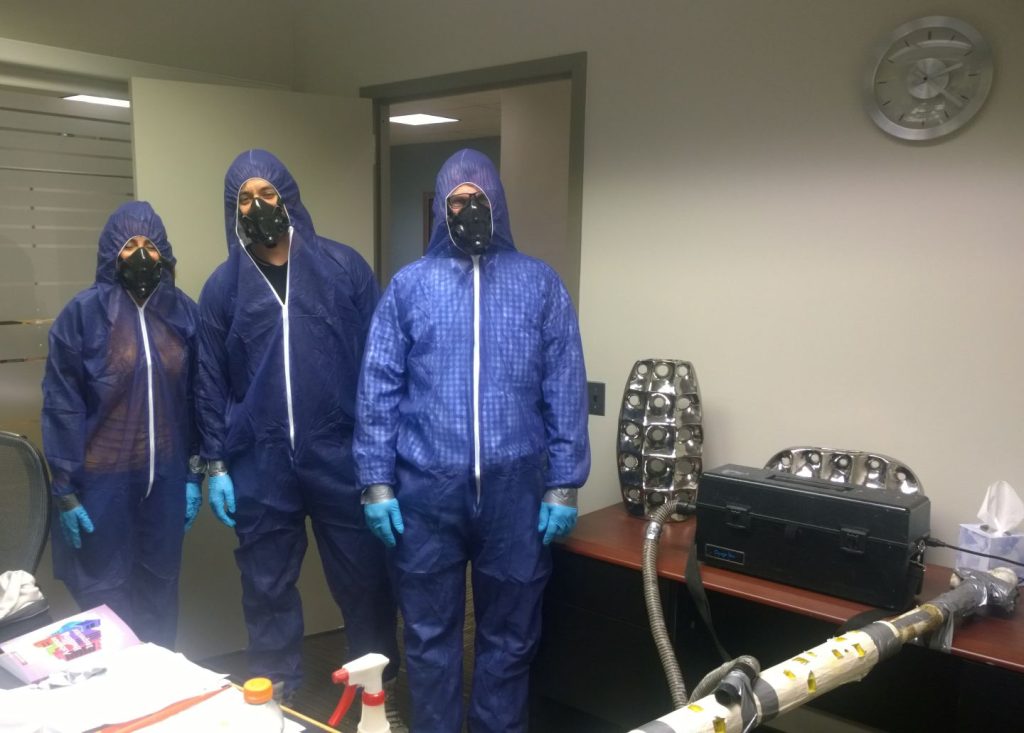
But experience teaches you where to look, what to question, what may be missing, and when the information doesn’t make sense. That is particularly important when dealing with complicated buildings, layered materials, debris, concealed materials, contamination assessments, and unusual laboratory results. Technology and regulations will continue to change. The need for experienced professionals will not.
Training is only the beginning
We Need Better Guidance, Not More Confusion
We believe NYSDOL deserves credit for attempting to provide additional guidance to the asbestos community. However, guidance needs to be technically accurate, internally consistent, and clearly connected to the regulatory requirements.
If the industry is going to use this fact sheet as a standard for preparing asbestos surveys, then the information needs to withstand the same scrutiny that NYSDOL expects consultants to apply to their own surveys. That means asking some difficult questions.
- What is the regulatory basis?
- What is the sampling methodology?
- What does the laboratory result actually tell us?
- What does it not tell us?
- What is the regulatory threshold?
And perhaps most importantly:
- Are we deciding based upon science and regulation—or simply because a piece of paper told us to?
After more than three decades in this industry, we have learned that asbestos work is rarely as simple as checking a box.
- The details matter.
- The sampling matters.
- The laboratory method matters.
- The interpretation matters.
And ultimately, the quality of the asbestos survey matters. Because when the survey is wrong, everyone downstream pays the price.


