Cheap Dumpsters for Businesses Can Cost More If You Ignore These Details By Ashley Rodriguez of Bins 4 Less
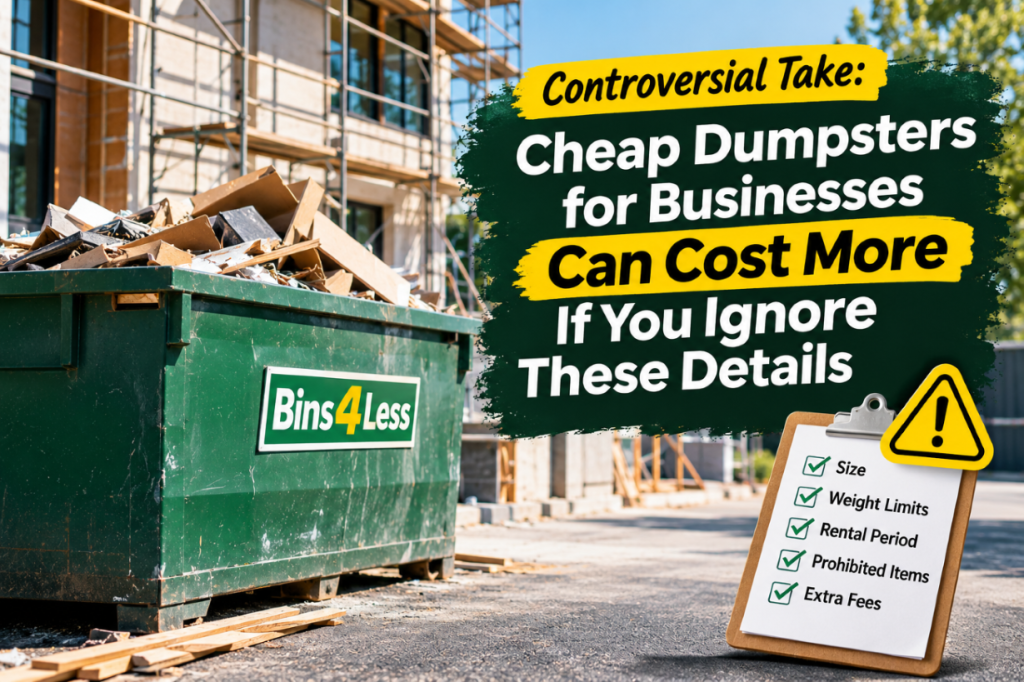
Finding the cheapest dumpster available sounds like smart business. After all, a dumpster is essentially there to collect waste, so why pay more than necessary? The problem is that the advertised rental price rarely tells the whole story. A low upfront quote can become surprisingly expensive once weight limits, rental periods, prohibited materials, pickup schedules, and additional charges enter the equation. Bins 4 Less For businesses that regularly generate waste, the better goal isn’t simply finding the lowest price. It’s finding a dumpster that matches the volume and type of debris being produced. Companies comparing local providers such as Bins 4 Less should look beyond the headline rate and consider the complete terms of the rental. A slightly different dumpster size or rental arrangement may ultimately make more financial sense than automatically choosing the cheapest option. The Cheapest Dumpster May Be the Wrong Size One of the easiest mistakes to make is renting a dumpster that’s too small. Imagine a business clearing out an office, renovating a retail space, or disposing of packaging after a major delivery. A smaller dumpster may have the lowest advertised rate, but if it fills halfway through the project, the business could need another pickup or an additional container. That can quickly erase the original savings. On the other hand, renting a container that’s unnecessarily large can mean paying for capacity that never gets used. Estimating the volume of waste before booking helps businesses find the middle ground between these two problems. Weight Limits Can Change the Final Price Dumpster size isn’t the only number that matters. Weight is equally important. Materials such as concrete, dirt, roofing debris, tile, and construction waste can become extremely heavy even when they don’t take up much physical space. A dumpster might look only partially full while already approaching