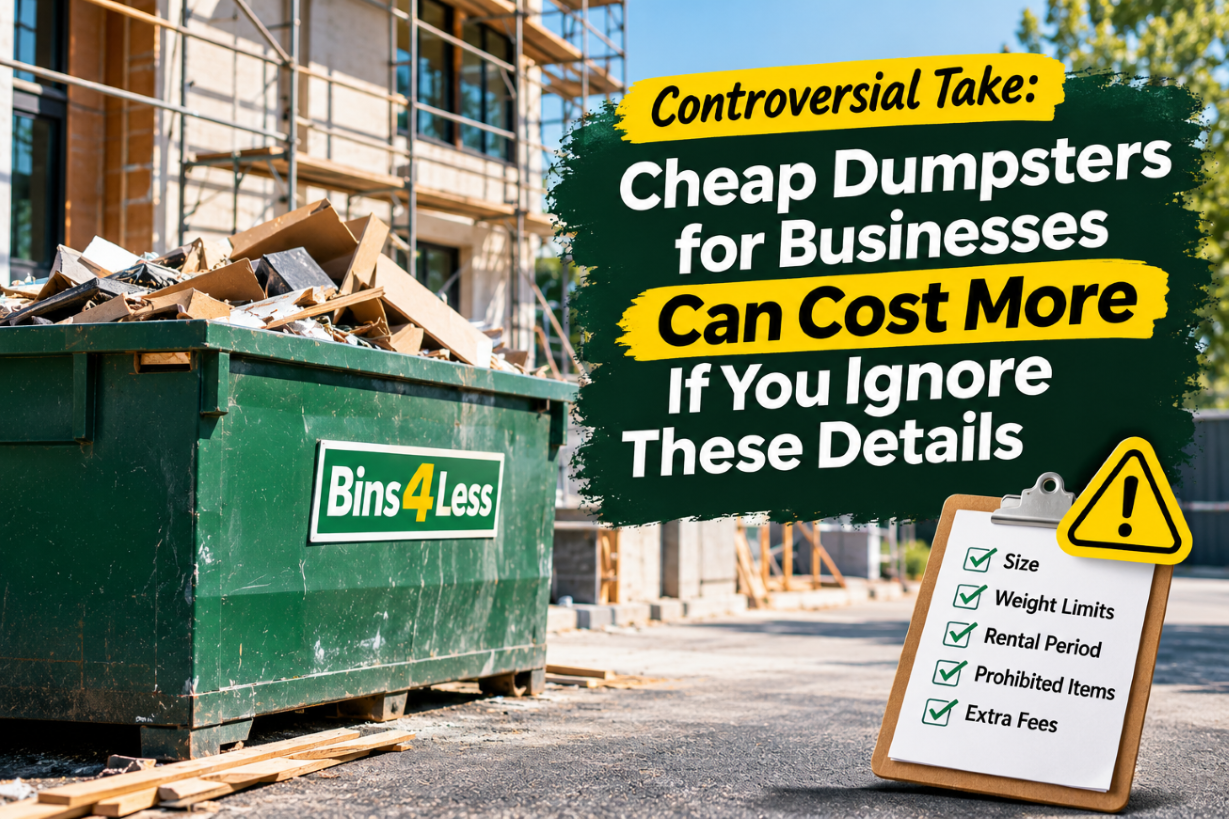
Finding the cheapest dumpster available sounds like smart business. After all, a dumpster is essentially there to collect waste, so why pay more than necessary? The problem is that the advertised rental price rarely tells the whole story. A low upfront quote can become surprisingly expensive once weight limits, rental periods, prohibited materials, pickup schedules, and additional charges enter the equation.
 Dumpster Details That Save Businesses Money |
| Bins 4 Less |
For businesses that regularly generate waste, the better goal isn’t simply finding the lowest price. It’s finding a dumpster that matches the volume and type of debris being produced. Companies comparing local providers such as Bins 4 Less should look beyond the headline rate and consider the complete terms of the rental. A slightly different dumpster size or rental arrangement may ultimately make more financial sense than automatically choosing the cheapest option.
The Cheapest Dumpster May Be the Wrong Size
One of the easiest mistakes to make is renting a dumpster that’s too small.
Imagine a business clearing out an office, renovating a retail space, or disposing of packaging after a major delivery. A smaller dumpster may have the lowest advertised rate, but if it fills halfway through the project, the business could need another pickup or an additional container.
That can quickly erase the original savings.
On the other hand, renting a container that’s unnecessarily large can mean paying for capacity that never gets used. Estimating the volume of waste before booking helps businesses find the middle ground between these two problems.
Weight Limits Can Change the Final Price
Dumpster size isn’t the only number that matters. Weight is equally important.
Materials such as concrete, dirt, roofing debris, tile, and construction waste can become extremely heavy even when they don’t take up much physical space. A dumpster might look only partially full while already approaching its permitted weight.
Businesses should therefore ask what weight allowance is included in the quoted price and what happens when that limit is exceeded. If overage fees apply, understanding them beforehand makes it much easier to estimate the true cost of the rental.
This becomes particularly important during remodeling, construction, landscaping, and property cleanup projects where heavy debris is common.
Rental Periods Matter More Than You Think
A low rental price may cover fewer days than expected.
Suppose one provider offers a lower rate but includes only a short rental window. If a renovation gets delayed or a cleanup takes longer than planned, daily extension charges could make that inexpensive dumpster more costly than an alternative with a longer standard rental period.
Before booking, businesses should confirm when the rental period begins, how many days are included, whether weekends count, and what extension fees apply.
Matching the rental window to the actual project schedule can prevent unnecessary charges.
Know What You Can Actually Put Inside
Not every type of waste belongs in a standard dumpster.
Depending on local regulations and the waste provider’s policies, certain materials may require separate handling or may be prohibited entirely. Businesses should clarify these restrictions before employees begin throwing materials into the container.
This is especially important when a project could involve electronics, chemicals, batteries, paint, appliances, hazardous substances, or other regulated materials.
A simple conversation with the rental provider before delivery can prevent confusion, rejected loads, or additional handling expenses later.
Location Can Create Unexpected Problems
Where the dumpster will sit is another detail businesses sometimes overlook.
A container needs enough space for both placement and removal. The delivery truck also needs safe access to the location. Tight alleys, parked vehicles, gates, low branches, overhead wires, and restricted loading areas can complicate delivery.
Businesses should measure the intended placement area and make sure the route is accessible before the dumpster arrives.
Depending on the property and local requirements, placing a dumpster on a public street or other public space may also require permission or a permit. Checking these requirements beforehand is much easier than dealing with them after delivery.
Pickup Scheduling Can Affect Business Operations
A full dumpster sitting outside a business for several extra days isn’t just inconvenient. It can interfere with parking, deliveries, employees, customers, contractors, and the overall appearance of the property.
Before choosing a provider, ask how pickup works.
Is removal automatically scheduled? Does the customer need to call? How much notice is normally required? What happens if the dumpster fills earlier than expected?
For businesses operating on strict renovation, construction, or reopening schedules, dependable pickup can be just as important as the rental price itself.
Compare the Total Cost, Not Just the Advertised Rate
A useful dumpster quote should make it possible to understand what you’re actually paying for.
Before making a decision, compare the dumpster size, included weight allowance, rental duration, delivery and pickup terms, extension costs, potential overage charges, and restrictions on materials.
For example, Dumpster A might have the lowest initial price but a smaller weight allowance and shorter rental period. Dumpster B might cost slightly more upfront but include enough capacity and time to complete the entire project without additional charges.
In that situation, Dumpster B may actually be the cheaper option.
Think About the Waste Before Choosing the Dumpster
Different businesses generate very different waste.
A restaurant clearing packaging doesn’t have the same requirements as a contractor removing construction debris. A retail store renovation differs from an office cleanout, while landscaping work creates another waste profile entirely.
Before requesting a dumpster, estimate three things: what you’re throwing away, approximately how much there will be, and how heavy the materials are likely to become.
Providing that information when requesting a quote can help identify a more appropriate container from the start.
Cheap Isn’t Bad—Unclear Pricing Is
There’s nothing inherently wrong with choosing an inexpensive dumpster rental. Businesses should absolutely avoid paying more than necessary.
The mistake is treating the initial price as the only factor that matters.
A genuinely affordable dumpster is one that fits the project, accommodates the expected waste, provides enough rental time, and comes with terms the customer understands before booking.
The controversial part isn’t that cheap dumpsters are bad. It’s that the cheapest advertised option isn’t always the cheapest option by the time the job is finished. Businesses that compare the complete rental terms—not just the headline number—are in a much better position to control costs and keep their cleanup running smoothly.
 |
| Ashley Rodriguez |
Author Name: Ashley Rodriguez
Bio: Ashley Rodriguez is an administrative analyst and customer service expert at Bins 4 Less, Inc. She has over two years of direct experience in the waste hauling industry and a lifetime of knowledge from her family’s business. She has refined the customer service experience and helped hundreds of customers find the right dumpster for their projects. https://www.linkedin.com/in/agrrodriguez/


