|
Welcome to the November issue of the Safety Suzy Newsletter!
|
|
|
|
|
As Thanksgiving approaches, we’re reminded to appreciate the workers and the professionals who protect lives every day. This month’s focus is on Toxic Dusts: Demolition & Disaster Implications and other kinds of dust that can cause different health outcomes, underscoring the need to better protect workers from these various dusts.
🎧 Don’t miss After the Refresher, our very own YouTube podcast hosted by Angelo Garcia III, where we further the discussions held in our training classes on asbestos, mold, and OSHA compliance.
This season, we give thanks for progress—and for those who keep our workplaces safe.
|
|
|
|
| 🎙️ Tune In to After the Refresher!🎙️ |
|
|
|
|
Join Angelo Garcia III of Future Environment Designs as he takes you beyond the classroom to unpack the latest in asbestos, mold, indoor air quality, and OSHA compliance.
After the Refresher Episode 10 – Current Asbestos and Mold Refresher Topics. Similar to Episode 1, we cover some of the items we are going over in our asbestos and mold refresher classes.
🔥 Stay informed. Stay compliant. Stay refreshed.
👉 Subscribe now to After the Refresher on YouTube and never miss an episode!
|
|
|
|
|
|
| Straight talk on the issues shaping health and safety, today. |
|
|
|
| “You can be happy if you know this secret: Some things are within your power to control and some things are not.” — Epictetus |
|
|
|
| TOXIC DUSTS: DEMOLITION & DISASTER IMPLICATIONS By Angelo Garcia, III, CIEC, CEOP — Founder, Future Environment Designs, Inc. |
|
|
|
|
Over a decade ago, we frequently discussed Jon Stewart’s Daily Show coverage of the James Zadroga 9/11 Health and Compensation Act—legislation passed to pay for medical care for emergency responders and demolition workers who worked “the pile” after 9/11. That bill was necessary because of a fundamental failure to provide basic respiratory protection, training, and fit testing. Providing proper respirators would have been simple and far less costly than the ongoing human and financial toll our country continues to pay. In fact, 9/11-related deaths among FDNY responders have now surpassed the number lost on the day of the attacks, prompting Congress to pass a bipartisan fix in early 2026 to secure World Trade Center Health Program funding through 2040.
Emergency responders, demolition crews, and disaster relief workers are routinely exposed to complex toxic mixtures. While the “usual suspects” in demolition are asbestos, lead, and silica, the 9/11 pile exposed workers to a caustic alkaline dust laced with mercury, polychlorinated biphenyls (PCBs), dioxins, polycyclic aromatic hydrocarbons (PAHs), and volatile organic compounds (VOCs).
Unfortunately, history has a habit of repeating itself when respiratory protection is treated as an afterthought:
- Disaster Cleanup & Oil Spills: Following the 2010 Deepwater Horizon Gulf Oil Spill, emergency and cleanup workers were exposed to crude oil vapors and chemical dispersants without adequate respiratory protection—leading to chronic respiratory illnesses documented years later.
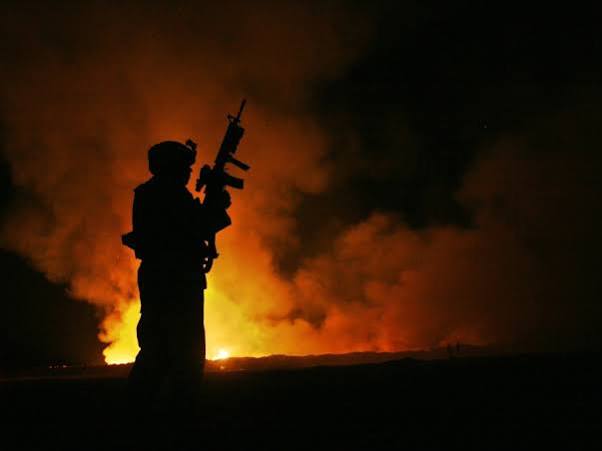
- Military Burn Pits: Service members returning from Iraq and Afghanistan suffered severe, irreversible lung injuries from inhaling fine desert dust mixed with toxic smoke from open-air burn pits—a crisis that eventually led to the 2022 PACT Act to guarantee healthcare for over 20 presumptive conditions.
- Wildfire Smoke & Urban Ash: Today, demolition and outdoor workers face a rapidly growing airborne hazard: wildfire smoke and post-fire structural debris. When wildfires burn through structures, vehicles, and electronics (wildland-urban interface fires), the resulting smoke and ash mirror the toxic profile of 9/11 dust—carrying fine particulate matter (PM 2.5), heavy metals, asbestos, silica, and PAHs. Furthermore, standard N95 respirators filter particulates, but they do not protect against carbon monoxide, formaldehyde, or toxic gases present in active smoke plumes.
In the years since my original 2012 article, regulations have evolved to catch up with these realities—most notably through OSHA’s Respirable Crystalline Silica Standard for Construction (29 CFR 1926.1153) and state-level wildfire smoke mandates. Yet regulations only work when employers enforce them.
As Epictetus reminds us, some things are outside our control—we cannot stop every natural disaster or structural collapse. What is squarely within our power to control is how we protect our workers before they step onto a contaminated site. Proper hazard assessments, engineering controls, medical surveillance, and OSHA-compliant respiratory protection programs remain the most effective, affordable insurance policy we have.
|
|
|
|
| 2026 Zadroga Funding Update: 9/11 Health Watch — 2025–2026 Budget Shortfall & Legislative Resolution |
|
|
|
|
Covers how Congress averted program cuts in January 2026 to sustain medical care for over 137,000 surviving responders and demolition workers.
|
|
|
|
|
|
|
Wildfire Smoke & Post-Fire Demolition Hazards
|
|
|
|
| Organic & Agricultural Dust |
|
|
|
|
Dust from plants, animals, fungi, and bacteria—common in farming, woodworking, and textile manufacturing—can trigger distinct allergic and toxic reactions.
- Organic Dust Respiratory Diseases. A 2024 review in the CDC Stacks Repository outlines how bioaerosols in agriculture and waste processing cause conditions such as byssinosis, hypersensitivity pneumonitis, and idiopathic pulmonary fibrosis.
- Organic Dust Toxic Syndrome (ODTS). The Iowa Department of Health and Human Services provides a clinical breakdown of ODTS, a non-infectious, flu-like illness that occurs hours after heavy exposure to moldy hay, grain, or silage.
- Soil-Borne Fungal Spores. A report in JAMA Network (requires subscription to see the full report) documents outbreaks of coccidioidomycosis (Valley Fever) caused by inhaling Coccidioides fungal spores kicked up in dry, dusty outdoor work sites.
|
|
|
|
|
A New York Times investigation finds U.S. wildfire firefighters are falling ill and dying from cancers and lung diseases caused by years of toxic smoke exposure.
Despite decades of warnings, the Forest Service has refused to provide masks, citing costs and logistics, even as other countries equip crews with respirators. Firefighters continue working unmasked in hazardous air, believing the smoke is harmless.
Many now face lifelong illness or early death, while the Trump administration has delayed safety rules and cut health programs. “We’re lying to our people,” said a former Forest Service official, condemning decades of neglect.
|
|
|
|
| Environmental & Ambient Dust |
|
|
|
|
Fine particulate matter (PM 2.5) and {PM 10) from windblown dust and pollution can penetrate deep into the lungs and enter the bloodstream, triggering inflammation, asthma attacks, heart attacks, and strokes.
- EPA Overview. The U.S. Environmental Protection Agency (EPA) details how fine particulate matter affects lung and heart function, outlining specific risks for vulnerable groups like children and older adults.
- Global Health Burden. A report from NASA Earth Observatory examines how naturally occurring windblown dust contributes to global (PM 2.5) exposure and premature mortality from heart disease, stroke, and chronic obstructive pulmonary disease (COPD).
- Dust Storms & Mortality. Research highlighted by Nature Index explores large-scale studies linking intense sand and dust storms to acute spikes in ischemic stroke, myocardial infarction, and chronic lower respiratory disease.
- Broad Epidemiological Impacts. The UC Dust Project summarizes evidence connecting ambient dust to respiratory illness, allergic eye conditions, and emerging concerns around adverse birth outcomes.
|
|
|
|
| Quantitative Respirator Fit Testing |
|
|
OSHA 1910.134(f)(2) requires annual fit testing of tight-fitting respirators. FEDTC uses OHD’s Quantifit for quantitative testing to measure respirator fit and leakage, helping ensure properly fitting respirators. The Quantifit utilizes controlled negative pressure to challenge the respirator’s seal to the face. We can do the fit test as part of any refresher course, or we can schedule the fit test separately.
|
|
|
|
|
|
|
|
Use SafetySuzy10FEDTC at checkout to get 10% off of any of our health and safety courses. Don’t forget that our loyal customers get 15% off, so please get in touch if you’d like to find out more.
|
|
|
|
|
|
|
| Important Links |
|
|
Upcoming FEDTC Courses (virtual, in-person, online).
FED Creates Asbestos Air Sampling Tables That Can be Used In the Field or the Office
Order Here!
FED Creates Asbestos Bulk Sampling Table That Can be Used In the Field or the Office
Order Here!
ELEVATE YOUR SAFETY PROGRAMS with SiteDocs and Future Environment Designs. Contact SiteDocs here.
“Do As I Say, Not As I Did! What I’ve Learned After 30-Years of Being in Business” – book by Angelo Garcia III
Order Here!
“The Role of Asbestos Inspections in Construction Safety” – book by Angelo Garcia III
Order Here!
FEDTC Training Library:
Click Here to access our Library.
Additional Resources
FEDTC’s Recent Blog Post:
Asbestos LinkedIn Group
Recent Discussion:
NYC Safety Sweep after Brooklyn Building Collapse..
Join the conversation and become a member of a thriving group of health and safety professionals.
|
|
|
|
|
|
|
|
OSHA Courses (Online & In-person):
- AHERA/OSHA Asbestos Awareness – Online
- OSHA/NYSDOL 4-hr Apprentice Asbestos Awareness – Online
- The Role of Asbestos Inspections in Construction Safety (New) 0.5 hr- Online
- OSHA Respirator User – Online
- OSHA Crystalline Silica Standard for Workers -Online
- OSHA Hazard Communication – Online
- OSHA Hazard Communication plus NYS Right-to-Know – Online
- Covid-19 Awareness Course – Online
- Respirator Hierarchy – Online
- Lead in Construction Awareness Course – Online
- Mold in Construction Awareness Course – Online
- Blood-borne Pathogen 4-Hour Course – Online
- OSHA Lead in Construction Awareness Course – Online
- OSHA 10 or 30-Hour Construction Safety and Health Course
- OSHA 10 or 30-Hour General Industry Safety and Health Course
Mold Courses:
- Keeping Your Family Safe Mold Awareness – Online
- Mold in Construction Awareness Course – Online
- Mold Assessment Initial
- Mold Remediation/Supervisor Initial
- Mold Abatement/Worker Initial
- NYS Mold Refresher
- Jan. 22, 8:30 AM – 12:30 PM, FEDTC’s Syosset
- Dec 4, 8:30 AM – 12:30 PM, Virtual
Asbestos Courses:
- AHERA/OSHA Asbestos Awareness Course – Online
- OSHA/NYSDOL 4-hr Apprentice Asbestos Awareness (NEW) – Online
- NYCDEP Handler/Supervisor Exam Prep – Online
- NYCDEP Investigator Exam Prep – Online
- AHERA LEA’s Designated Person Training – Online
- The Role of Asbestos Inspections in Construction Safety (New) – Online
- NYS/NYC Asbestos Supervisor Initial
- Feb 1 – 5, 27 8:30 AM – 4:30 PM, Queens
- NYS Asbestos Inspector Initial
- Dec 21 – 23, 2026 8:30 AM – 4:30 PM, FEDTC’s, Syosset
- Asbestos Supervisor Refresher
- Dec 17, 7:30 AM – 3:30 PM, National Grid
- Jan 25, 8:30 AM – 4:30 PM, FEDTC’s Syosset
- NYS Asbestos Project Designer Refresher
- Dec 10, Jan. 27, 8:30 AM – 4:30 PM, FEDTC’s Syosset
- Jan 7, 8:30 AM – 4:30 PM, Virtual
- NYS/NYC Asbestos Inspector Refresher
- Dec 18, 7:30 AM – 11:30 PM, National Grid
- Jan 8, 2027 8:00 AM – 12:00 PM, Virtual
- Jan 28, 8:00 AM – 12:00 PM, FEDTC’s Syosset
- Asbestos Management Planner Refresher
- Jan 8, 2027 12:30 PM – 4:30 PM, Virtual
- Jan 28, 12:30 PM – 4:30 PM, FEDTC’s Syosset
- NYS Asbestos Project Monitor Refresher
- Dec 15, Jan 26, 8:30 AM – 4:30 PM, FEDTC’s Syosset
- Jan 6, 8:30 AM – 4:30 PM, Virtual
- NYS Asbestos Project Sampling Technician Refresher
- Dec 15, Jan 26, 8:30 AM – 12:30 PM, FEDTC’s Syosset
- Jan 6, 8:30 AM – 12:30 PM, Virtual
For the most current schedule and additional courses, please visit Future Environment Designs’ website.
Please click on the individual courses’ link to discover more dates!
|
|
|
|
|
Don’t Forget Our Referral Program!
If you refer asbestos, indoor air quality, or OSHA training to us we will provide you with a 5% discount on any training you book with us. This would be in addition to any other discounts we provide.
Thank you to those who have taken advantage of this!
|
|
|
|
|